
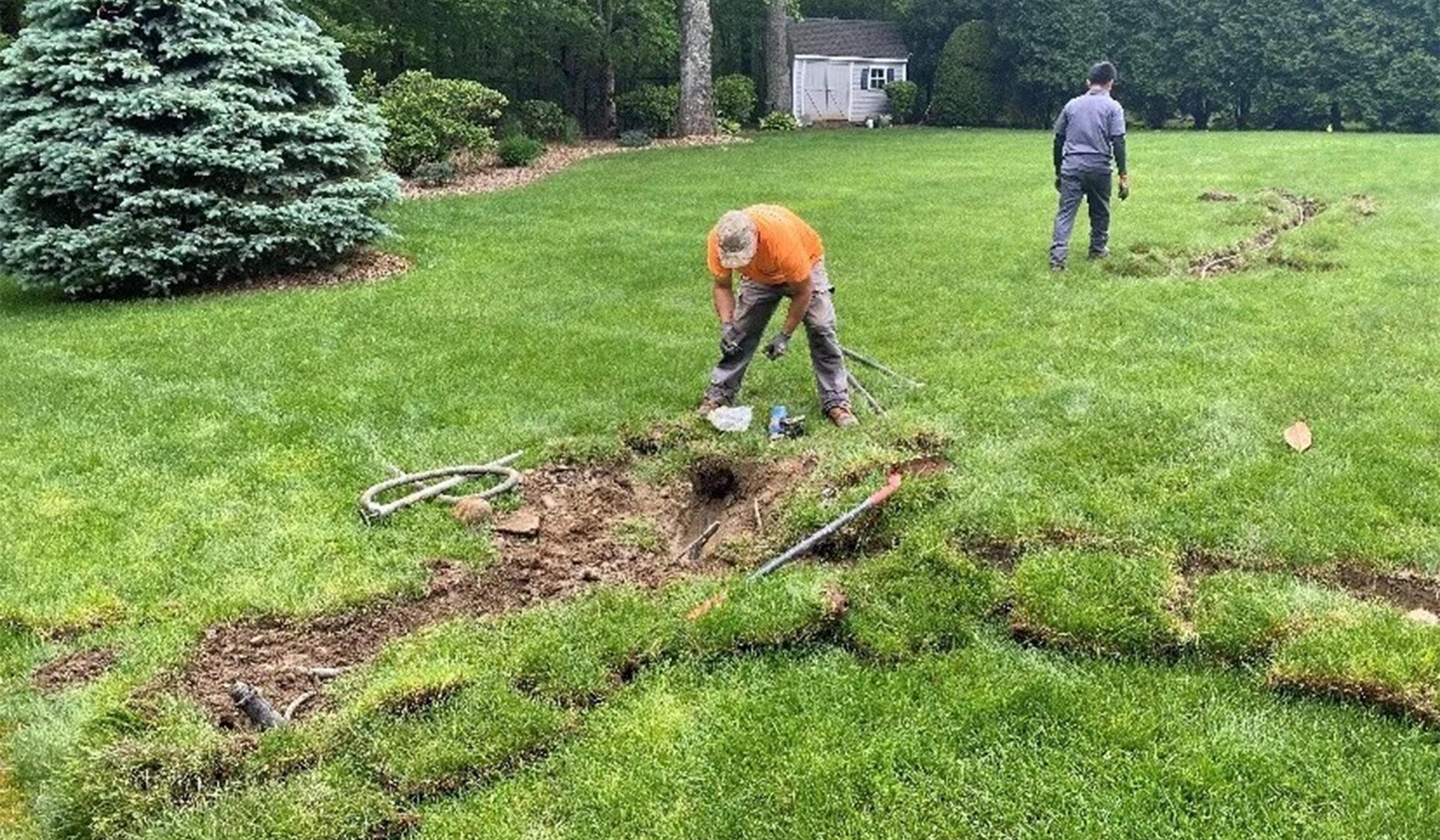
Why Complete Irrigation Systems Are Worth Understanding Before You Buy
Complete irrigation systems give your lawn and garden consistent, automated watering — without the hassle of dragging hoses or guessing how much water your plants need.
Here is a quick overview of what they are and why they matter:
- What they are: A network of pipes, valves, sprinkler heads or drip emitters, and a controller that automates watering across your entire property
- Main types: Sprinkler systems, drip irrigation, and hybrid systems combining both
- Who they’re for: Homeowners, commercial property owners, and anyone who wants a healthier lawn with less effort
- Key benefit: Smart systems can save up to 40% on annual water consumption compared to manual watering
- Biggest consideration: Property size, soil type, plant variety, and local climate all affect which system is right for you
Water is easy to take for granted — until you realize how little of it is actually available. Less than 0.6% of all water on Earth is freshwater accessible for everyday uses like drinking, bathing, and yes, keeping your lawn alive. And in the United States, roughly 30% of all water consumed goes toward irrigation.
That means how you water your landscape matters — a lot.
For busy Rhode Island property owners, the pressure is real. You want a beautiful, healthy outdoor space. But between work, family, and everything else, manually managing your lawn’s water needs simply isn’t realistic. A well-designed complete irrigation system solves that problem — automatically, efficiently, and without wasting one of the planet’s most precious resources.
This guide walks you through everything you need to know: how these systems work, which type fits your property, what smart technology can do for your water bill, and why professional installation pays off in the long run.
Defining and Choosing complete irrigation systems
When we talk about complete irrigation systems, we aren’t just talking about a better sprinkler; we’re talking about a fully integrated infrastructure for your land. Unlike traditional methods—which usually involve a garden hose, a manual sprinkler, and a lot of “hoping for the best”—automated systems take the guesswork out of the equation.
Choosing the right system in 2026 requires looking at more than just the price tag. You have to consider the “DNA” of your property. For example, if you live in a coastal area like Narragansett or Wakefield, your soil porosity is likely high. Sandy soils drain water quickly, meaning your plants might need shorter, more frequent watering cycles compared to the denser clay soils found further inland.
Water conservation is the driving force behind modern design. By utilizing More info about irrigation systems, you can ensure that your system is tailored to the specific needs of your plants, whether they are thirsty turfgrass or drought-tolerant shrubs.
Factors for Property Owners in 2026
A successful installation starts with a comprehensive site assessment. We look at several critical variables:
- Sun Exposure: South-facing slopes dry out significantly faster than shaded areas under oak canopies.
- Sandy Soils: Common in Rhode Island, these require precise delivery to prevent nutrients from leaching away.
- Zoning Strategies: This is the practice of grouping plants with similar water needs together. You wouldn’t want to water your succulents the same way you water your Kentucky Bluegrass.
- Elevation Limits: If your property has significant hills, we have to account for pressure loss and drainage issues.
At Lawnscapes, we believe that our quality standards means never taking a “one size fits all” approach. Every Rhode Island Irrigation Solution we design is built to respect the unique topography of your yard.
Residential vs. Commercial Applications
While the basic mechanics are similar, the scale and goals of residential versus commercial systems often differ.
- Residential: Focuses on curb appeal, garden beds, and efficient turf management. Homeowners often look for Landscape Construction services that integrate irrigation seamlessly into new patios or plantings.
- Commercial: These systems often cover massive areas like sports pitches, nurseries, or office parks. For these clients, Commercial irrigation expertise is vital to manage high-volume water use while strictly adhering to municipal regulations and utility budgets.
Core Components and Smart Technology
Understanding what goes into your yard helps you appreciate the complexity of a professional system. It’s not just “pipes in the ground.”
| Feature | Drip Irrigation | Traditional Sprinkler |
|---|---|---|
| Water Delivery | Directly to the root zone | Aerial spray/mist |
| Efficiency | Very High (minimal evaporation) | Moderate (wind can affect spray) |
| Best For | Flower beds, shrubs, trees | Large turf areas, lawns |
| Visibility | Mostly hidden under mulch | Pop-up heads visible when active |
A professional system also includes critical safety components like backflow preventers. These ensure that the water used for your lawn never siphons back into your home’s clean drinking water supply. This is a non-negotiable requirement for any complete irrigation system installed to modern standards.
Essential Hardware for complete irrigation systems
To get the job done right, we use professional-grade hardware designed to last for decades:
- Rotary Sprinklers: These deliver a “curtain” of water in a rotating pattern, which is more wind-resistant than fine mists.
- Pop-up Heads: These stay flush with the ground when not in use, so you don’t have to worry about tripping over them or hitting them with the lawnmower.
- Drip Emitters: Perfect for targeted watering in garden beds.
- Rain Sensors: A simple but effective tool that tells your system to stay off if Mother Nature has already provided enough water.
- Pressure Regulators: These prevent “misting” or “fogging,” where water turns into a fine cloud that just blows away instead of soaking into the grass.
Using high-efficiency irrigation hardware is the first step toward a lower utility bill.
The Role of Smart Technology in complete irrigation systems
The “Smart” revolution has changed irrigation more than almost any other home service. Modern controllers now use Wi-Fi to connect to local weather stations. If the forecast for Providence calls for a heavy afternoon thunderstorm, your system will automatically skip its morning cycle.
This weather-aware scheduling can lead to upwards of 40% water savings annually. Some advanced setups, like smart irrigation technology, even use soil moisture sensors. These act like a “nervous system” for your yard, telling the controller exactly how thirsty the soil is at the root level. With app control, you can even turn your sprinklers on or off from your phone while you’re on vacation!
Professional Installation vs. DIY Methods
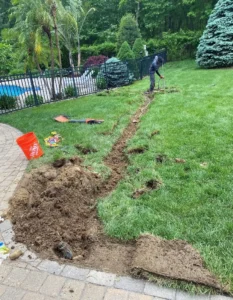
It’s tempting to look at a “sprinkler kit” at a big-box store and think, “I can do that this weekend.” However, there is a massive difference between a DIY kit and a professionally engineered system.
A professional installation involves specialized tools, such as vibrating plows or trenchers that minimize damage to your existing lawn. More importantly, it involves hydraulic design. If you put too many heads on one line, none of them will have enough pressure to pop up. If you put too few, you’ll waste water and money.
When you invest in lawn and landscape care through a professional, you are also ensuring that all local permit requirements are met and that the system offers a long-term ROI. Why choose professional installation? Because a mistake buried six inches underground is very expensive to fix later.
The Benefits of Expert Design
Our team focuses on uniform coverage—also known as “head-to-head spacing.” This ensures that every inch of your lawn gets the same amount of water, preventing those frustrating brown spots. We also take care of:
- Utility Line Safety: We coordinate the marking of gas, electric, and water lines before we dig.
- Customized Zoning: Creating separate programs for your shady backyard and your sunny front yard.
- Backflow Certification: Ensuring your system meets Rhode Island health codes.
To see how we integrate these designs into a broader property plan, check out our full range of services.
Challenges of Self-Installation
DIYers often run into several common roadblocks:
- Trenching Labor: Digging hundreds of feet of trench by hand is back-breaking work.
- Pressure Loss: Not calculating the “friction loss” in the pipes, leading to weak spray patterns.
- Hardware Compatibility: Mixing different brands of heads often results in uneven watering.
- Troubleshooting: Finding a leak in a DIY system can feel like looking for a needle in a haystack.
Maintenance and Winterization for Longevity
A complete irrigation system is an investment, and like any investment, it needs a little “TLC” to stay in peak condition. Seasonal adjustments are key. You shouldn’t be watering your lawn in May the same way you do in the heat of July.
Routine maintenance includes checking for clogged nozzles, replacing controller batteries, and ensuring that heads haven’t been knocked out of alignment by a stray soccer ball or a snowplow. If you notice a soggy spot in your yard or a spike in your water bill, it’s time to contact us for maintenance to perform a leak detection audit.
Winterization Steps for Rhode Island Climates
In Rhode Island, winterization (or “blowing out” the system) is the most important maintenance task of the year. If water stays in the pipes when the ground freezes, it will expand and shatter the plastic, leading to thousands of dollars in damage.
The process involves:
- Main Valve Shutdown: Cutting off the water supply to the system.
- The Blowout Method: Using a high-volume air compressor to force every drop of water out of the lines, valves, and heads.
- Controller Settings: Setting the timer to “Off” or “Standby” for the season.
- Freeze Protection: Ensuring any above-ground components are insulated.
Routine Performance Audits
Every few years, it is wise to perform a full system audit. As your landscape matures, a sprinkler head that used to water the lawn might now be blocked by a growing hydrangea bush. We can help you with:
- Coverage Checks: Re-aligning heads for better efficiency.
- Timer Updates: Upgrading older clocks to smart, Wi-Fi-enabled controllers.
- 2026 Water Regulations: Ensuring your system complies with any new local conservation laws.
At Lawnscapes, we know that a beautiful yard is more than just a luxury—it’s an extension of your home and a significant financial investment. Our commitment to the highest quality means we don’t just “install sprinklers”; we provide complete irrigation systems that protect your landscape while respecting our local water resources.
By combining expert design, professional-grade hardware, and the latest smart technology, we help Rhode Island property owners achieve vibrant, healthy outdoor spaces with minimal effort and maximum efficiency.
Ready to stop dragging the hose and start enjoying your lawn? Schedule your complete irrigation system consultation with Lawnscapes today. Let’s build a smarter, greener future for your property together.