
A Clean Yard Starts With the Right Plan
Yard clean up is one of the most impactful things you can do for your property — but knowing where to start makes all the difference.
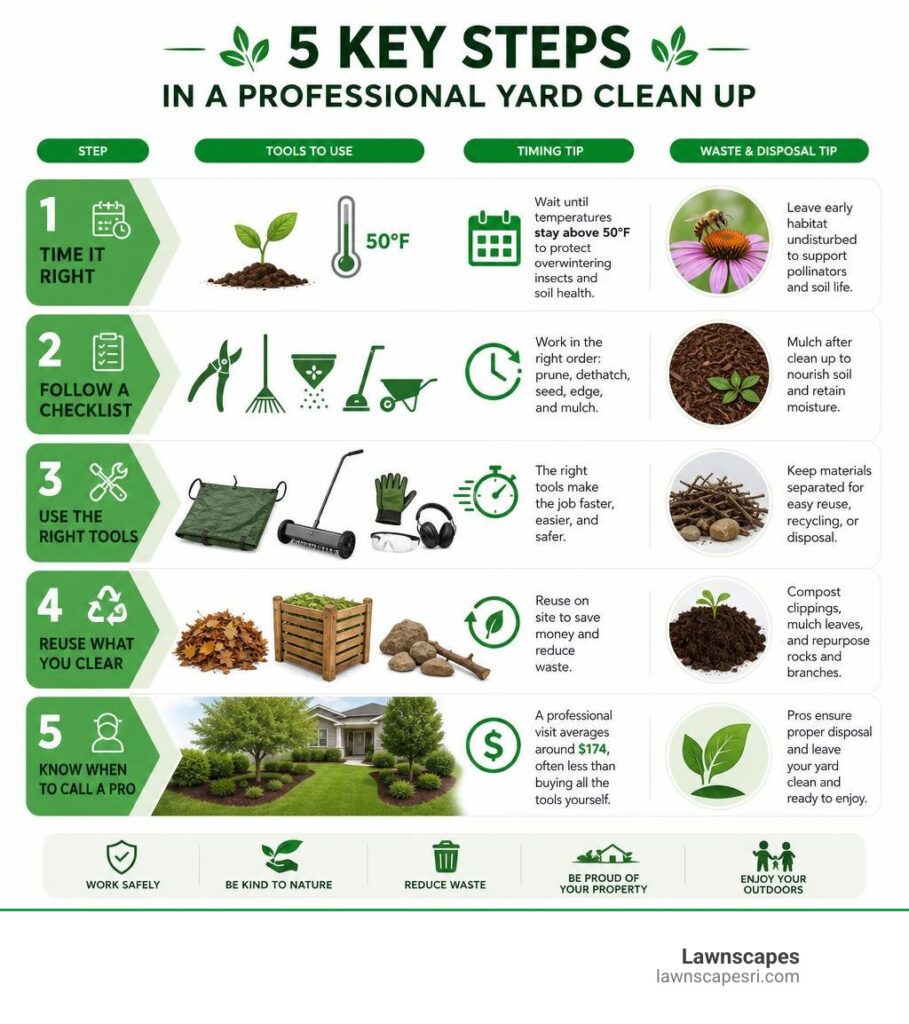
Here’s a quick overview of the 5 ways to tackle it like a pro:
- Time it right — Wait until temperatures stay above 50°F to protect overwintering insects and soil health
- Follow a checklist — Prune, dethatch, seed, edge, and mulch in the right order
- Use the right tools — A drag tarp, magnet sweeper, and proper safety gear make the job faster and safer
- Reuse what you clear — Mulch leaves in place, compost clippings, and repurpose rocks and branches
- Know when to call a pro — A professional visit averages around $174, often less than buying all the tools yourself
Most Rhode Island homeowners put yard cleanup on the back burner until it becomes overwhelming. A few fallen branches become a season’s worth of debris. One neglected bed turns into a weed problem. Before long, what should take a weekend takes a whole week — or a professional crew.
The good news? With the right approach, even a heavily overgrown yard can be brought back to shape efficiently and sustainably.
I’m Mark Trosin, founder of Lawnscapes, and I’ve been doing professional yard clean up across Rhode Island since 1994 — working on thousands of residential and commercial properties in every season. In this guide, I’ll share exactly how we approach it, so you can do the same.
1. Timing Your Property Care to Protect Pollinators and Soil
When spring sunshine breaks through after a long New England winter, it is tempting to grab a rake and clear away every dead leaf in sight. However, jumping the gun on early spring yard clean up can cause serious harm to your soil structure and local pollinators.
Many of Rhode Island’s essential pollinators — including native solitary bees, ladybugs, green lacewings, and swallowtail butterflies — spend the winter hiding in leftover leaf litter, hollow plant stems, or just beneath the surface of garden beds. If you disturb these shelters while temperatures are still freezing, you destroy these beneficial creatures before they have a chance to wake up and help your garden flourish.
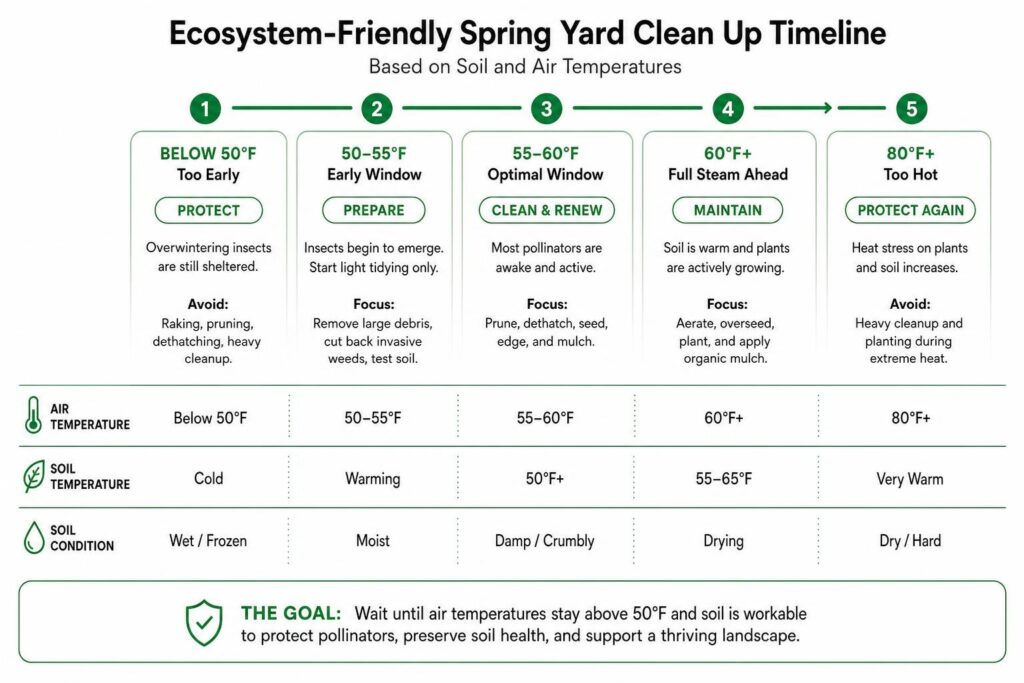
The general rule of thumb for eco-friendly landscaping is the 50°F temperature threshold. You should delay heavy raking, leaf blowing, and stem trimming until daily outdoor temperatures consistently stay at or above 50°F. Waiting for this mark guarantees that overwintering insects have safely emerged from dormancy.
Optimal Timing for Your Spring Yard Clean Up
In Southern New England and coastal Rhode Island, early spring weather is notorious for unpredictable cold snaps. Consequently, the optimal window for spring property cleanups in our region is generally late April to early May.
Beyond protecting beneficial wildlife, waiting for soil to dry out is vital for lawn protection. Walking heavily on muddy spring turf compacts the soil and rips delicate grass roots out of the ground. You can easily test whether your lawn is ready: take a stroll across the lawn. If your footprints remain visibly depressed in the grass or ooze water, the ground is far too wet for heavy foot traffic, dethatching, or core aeration.
When you do begin spring prep, keep an eye on soil temperature for pre-emergent weed control. Common annual lawn weeds like crabgrass begin germinating when topsoil temperatures reach 55°F for 5 consecutive days. Applying pre-emergent control right at this boundary creates a barrier that halts weed seed development before it overtakes your lawn.
2. Following a Pro-Level Spring Yard Care Checklist
Tackling property maintenance without a clear sequence leads to extra work. If you mulch before edging, or fertilize before clearing debris, you end up doing tasks twice. To achieve professional results, follow this proven chronological sequence:
- Winter Storm Pruning: Cut away dead, damaged, or storm-broken tree branches first. For flowering shrubs, remember this simple pruning rule: prune summer-blooming shrubs (like butterfly bush and late hydrangeas) in late winter or early spring before new growth starts. However, wait to prune spring-blooming shrubs (like azaleas, lilacs, and forsythia) until immediately after their blossoms drop, otherwise you will cut off this season’s flower buds.
- Perennial Stem Care: Trim back dead perennial foliage, but consider leaving a few inches of stem length in dormant beds or relocating cut hollow stems near a wooded boundary so native cavity-nesting bees can finish emerging.
- Selective Leaf Clearance: Clear heavy, packed leaf mats off the lawn where they threaten to suffocate grass blades. Light leaf scattering in flower beds can be left alone to break down as natural organic mulch.
- Early Weed Management: Dig up aggressive taproot weeds like dandelions early while the soil is soft.
- Dethatching and Raking: Once turf is dry, lightly rake away thatch (the layer of dead turf stems above the soil). Avoid aggressive power dethatching unless thatch build-up exceeds half an inch.
- Spot Seeding Bare Patches: Repair bare patches left by winter salt or pet activity. Work seed gently into topsoil and apply starter fertilizer. Note: Do not apply pre-emergent crabgrass control over freshly seeded turf patches, as it prevents grass seeds from germinating too.
- Lawn Mowing & Mulching Mowers: Perform your first seasonal mow on a slightly lower deck setting to remove dormant leaf tips. Always ensure mower blades are razor-sharp. Sharp blades make clean cuts, whereas dull blades shred grass, making it vulnerable to fungal disease.
Essential Turf Care and Garden Bed Prep
With the structural cleanup out of the way, turn your attention to bed presentation and turf vitality. Creating crisp, defined lines between turf grass and planting beds instantly elevates your property’s curb appeal.
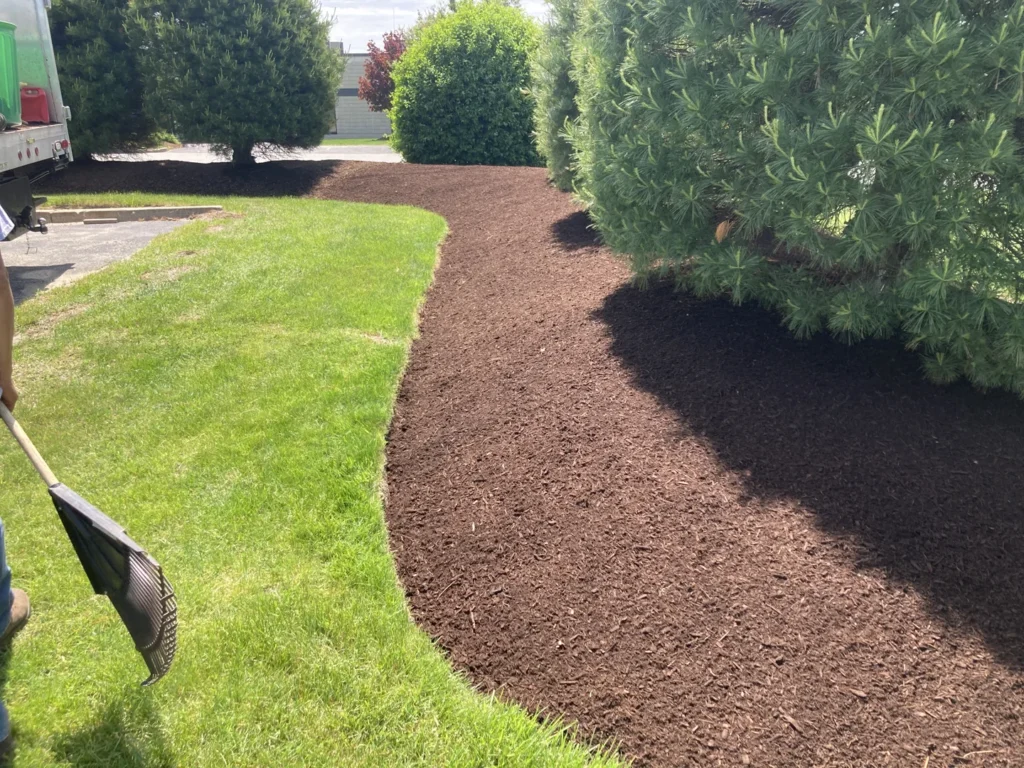
An easy professional trick for establishing bed boundaries is using a standard flex garden hose. Lay the hose along your garden perimeter to form smooth, flowing curves. Once you like the line, use a sharp, half-moon metal bed edger or square shovel to cut a deep, vertical 3-to-4-inch trench along the hose line. This trench creates an effective physical barrier that prevents grass runners from invading garden beds.
When soil becomes compacted from heavy winter snow loads, air, water, and nutrients struggle to reach root systems. Core aeration—pulling small soil plugs out of the lawn—opens up soil structure. In northern transition zones like Rhode Island, cool-season turf (such as Kentucky Bluegrass, Perennial Ryegrass, and Fine Fescues) benefits most from core aeration in early autumn, though spot aeration in compacted spring areas works wonders.
When applying spring fertilizer, less is more. Avoid heavy nitrogen applications in early spring; soft, rapid foliage growth encourages lawn diseases and weeds. Instead, wait until late spring (around May) when grass is actively growing. If you use a mulching mower during regular mowing, you automatically return up to 25% of required nitrogen right back to the turf.
Finally, refresh garden beds with organic mulch. Maintain a depth of 2 to 3 inches across planting beds. Mulch suppresses weeds, retains moisture, and protects root zones from summer heat. Take care to keep mulch 2 inches away from tree trunks and shrub bases; piling mulch directly against bark (so-called “mulch volcanoes”) traps moisture against wood, causing rot and attracting boring pests.
3. Clearing Debris Safely with the Right Tools and Workflows
- Cut-resistant gloves to protect hands against thorn bushes and sharp twigs.
- Safety glasses for protection when operating blowers or cutting branches overhead.
- Sturdy, non-slip boots for stability on uneven ground.
- N95 dust mask, which is essential when raking mature leaf piles or turning dry mulch. Dormant mold spores in decomposing leaves and soil can easily enter lungs long before any visible mold or odor is noticed.
Efficient Tool Selection Checklist
- Drag Tarp: Heavy-duty canvas or woven poly tarps are far superior to wheelbarrows for moving high volumes of leaves, branches, or hedge clippings. Dragging a packed tarp across turf requires significantly less energy than balancing heavy wheelbarrow loads over bumpy ground.
- Magnet Sweeper: Rolling a magnetic sweeper across lawns and driveways picks up stray nails, hardware, or construction wire left behind by winter contractors, saving your mower blades and car tires from severe damage.
- Pry Bar and Wood Block: When removing large landscape rocks or buried roots, use a pry bar paired with a heavy wooden block as a fulcrum to leverage weight effortlessly.
Step-by-Step Execution for DIY Yard Clean Up
- Clear Large Debris First: Walk the section to remove large fallen limbs, heavy pinecones, and scattered litter. If you attempt to rake leaves while large sticks hide underneath, your rake tines will constantly catch, slowing you down and damaging lawn roots.
- Break Down Tree Limbs: Chop downed branches into manageable 3-to-4-foot lengths. Stack straight branches neatly for firewood or bundle them with twine for municipal collection.
- Section and Windrow Small Debris: Use a flexible leaf rake or leaf blower to push small leaves, pine needles, and dead grass clippings into continuous rows (windrows), rather than scattering debris into random piles across the lawn.
- Tarp Collection: Spread your drag tarp alongside the windrow. Scoop debris onto the center of the tarp using two lawn rakes clamped together like large claws, or sweep leaves directly onto the tarp edge.
- Secure and Drag: Grab the corner handles of your tarp, fold them over the center to trap lightweight debris, and haul the load directly to your compost pile or staging site.
4. Reusing, Composting, and Recycling Natural Yard Waste
Sustainable Disposal and Material Repurposing
- Pruned Branches and Limbs: Renting or using a small home wood chipper turns downed branches into fresh, aromatic wood chips. Use these chips to line garden pathways, fill play zones, or layer around hardy shrub beds.
- Large Rocks and Boulders: Instead of hauling heavy rocks away, use them creatively in your landscape. Stack medium-sized stones to build decorative rock borders around garden beds, construct simple dry-stacked retaining edges along slopes, or line low areas to create natural dry creek beds for stormwater runoff control.
- Habitat Piles: Consider building a structured brush pile in an out-of-the-way woodland corner of your property using loose branches and limbs. These brush piles provide crucial shelter for songbirds, beneficial predatory insects, and native small wildlife during winter storms.
- Dedicated Composting: Layer brown organic materials (dry leaves, shredded twigs) with green materials (grass clippings, non-weedy plant trim) in a outdoor compost bin. Over summer, moisture and natural bacteria break this material down into “black gold” compost to enrich vegetables and flower gardens come autumn.
5. Knowing When to DIY vs Hiring Professional Yard Clean Up Services
| Cleanup Approach | Initial Equipment / Tool Costs | Average Cost per Visit | Key Pros | Key Cons |
|---|---|---|---|---|
| DIY Cleanup | ~$920 (mower, blower, trimmer, aerator, hand tools) | $0 (excludes fuel, bags, and dump fees) |
|
|
| Professional Service | $0 | ~$174 (range: $25 – $451) |
|
|
Factors That Drive Professional Service Costs
- Yard Size and Terrain: Cleanups for small suburban lots (< 2,500 sq. ft.) require far less time than sprawling acreage properties (10,000+ sq. ft.) featuring steep slopes, stone walls, or tight gates.
- Debris Volume and Type: Light leaf raking is fast. However, heavy wet leaf mats, dense pine straw, or large storm-downed oak limbs require significantly more labor, specialty chippers, and weight-based hauling fees.
- Service Frequency: Properties serviced regularly with weekly or biweekly lawn maintenance visits ($56 to $86 per visit) stay clean year-round. Consequently, seasonal cleanup costs on these properties are far lower than on properties receiving a single, heavy, one-time overhaul ($198+) after months of neglect.
- Post-Storm Emergency Response: Emergency removal of hazardous fallen limbs following major coastal winds or winter storms requires high-priority dispatch, chainsaws, and heavy equipment, which naturally carries higher pricing than standard seasonal maintenance.
What is the average cost of a professional yard cleanup in 2026?
- Small Yards (< 2,500 sq. ft.): $14 – $399
- Medium Yards (2,500 – 5,000 sq. ft.): $21 – $453
- Large Yards (5,000 – 10,000 sq. ft.): $25 – $486
- Extra-Large Properties (10,000+ sq. ft.): $28 – $556+
When is the best time to start spring yard cleanup?
How can homeowners save money on yard clean up?
- Pre-Cleanup Preparation: Clear away dog waste, toys, garden hose reels, and lawn furniture before your cleanup crew arrives so workers spend 100% of their billable time on actual property work.
- Consolidate and Stage Debris: If paying for junk or debris removal, gather branches and piles near your driveway or gate access to minimize labor haul time.
- Mulch Leaves in Place: Use your mulching mower to grind leaves directly into the lawn rather than paying fees for leaf collection and off-site haulage.
- Partial Yard Cleanups: Request services specifically for high-visibility areas like the front entrance and main entertainment patio, while handling secondary side alleys yourself.
- Maintain Regular Care: Keep up with regular routine mowing and minor weeding; preventing wild overgrowth avoids massive, expensive post-neglect cleanups.